
Table of contents
- Introduction
- What Are Vitamins? Understanding Their Role
- What Are Minerals? Key Functions and Sources
- Key Differences Between Vitamins and Minerals
- Why Vitamins and Minerals Are Important Together
- Common Deficiencies and Their Health Impacts
- Tips to Maintain a Balanced Intake of Vitamins and Minerals
- Conclusion
- FAQs
Introduction
Maintaining good health is crucial for living well. And vitamins and minerals play a key role in this. They enable our bodies to function smoothly by carrying out different bodily processes. We know the best source of receiving these nutrients is through food, but do you know the difference between vitamins and minerals?
While both are essential and share the same source food, they differ in structure and in how the body absorbs and processes them. In this blog, let’s understand what vitamins and minerals are, their differences, and explore ways to fulfill their needs.
What Are Vitamins?
Vitamins are organic substances that the body requires in small amounts to function properly. The vitamins are of two kinds: fat-soluble and water-soluble, and most are essential as they cannot be produced by the body.
- Fat-soluble vitamins: These vitamins dissolve in dietary fat and are stored in the liver, fatty tissue, and muscles. Four fat-soluble vitamins are A, E, D, and K.
- Water-soluble vitamins: These vitamins are not stored in the body, unlike the fat-soluble ones. They are required to be dissolved in water to be absorbed by the body. There are 9 water-soluble vitamins, including vitamin C and B vitamins.
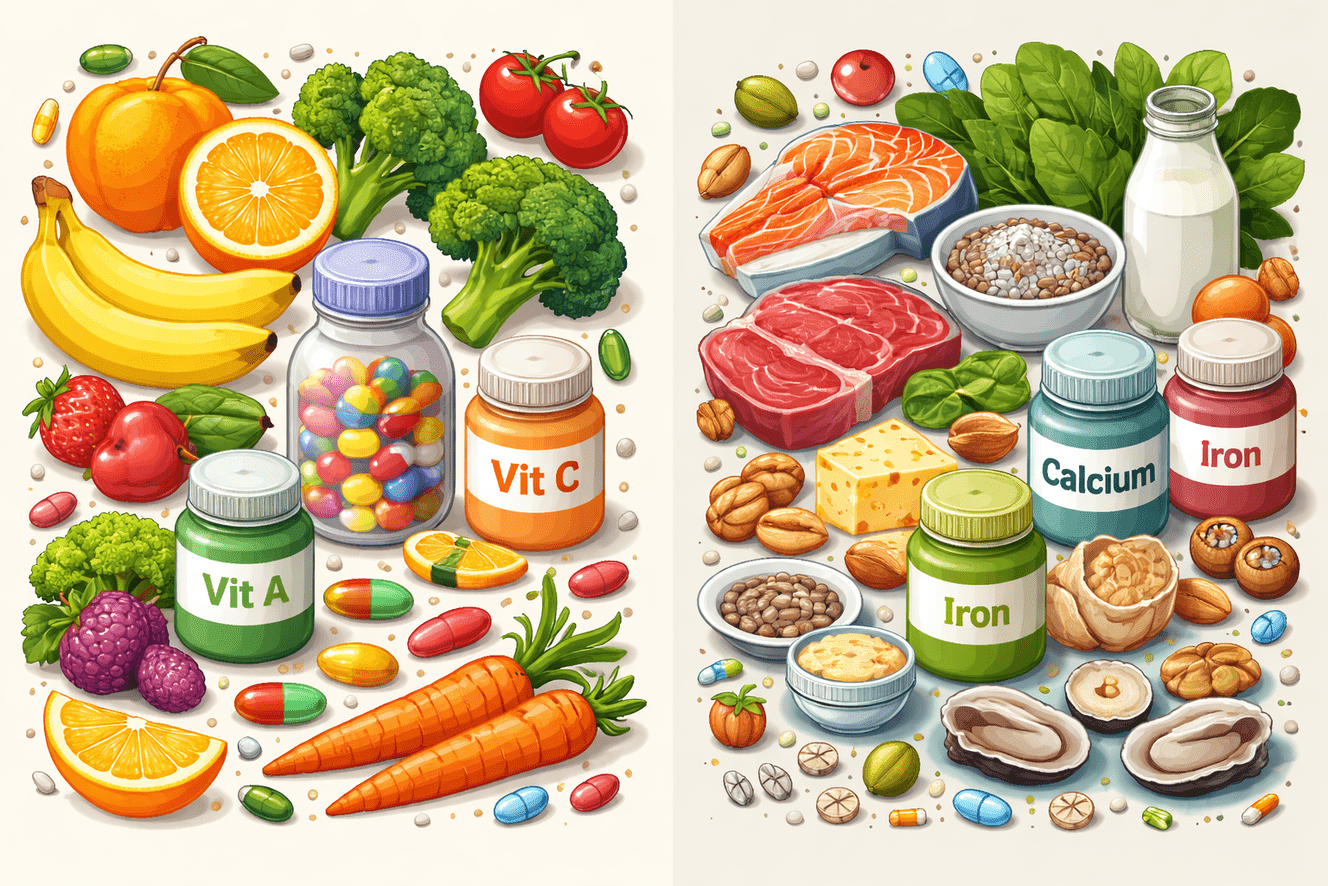
Vitamins help maintain teeth and bone structure, tissues, and muscles. They also help proteins carry out chemical reactions in the body. B vitamins are crucial to support the formation of red blood cells, maintain brain function, and support metabolism. Vitamin D helps absorb calcium essential for bones. Vitamin C plays an essential antioxidant role, promotes wound healing and helps absorb iron.
What Are Minerals? Key Functions and Sources
Minerals are inorganic elements required by the body to perform essential functions such as energy production, bone and tooth health, and muscle and nerve function.
Essential minerals are
- Calcium: Builds strong bones and teeth and helps in blood clotting, nerve transmission, and the regulation of metabolism, among many others. Milk and dairy, dates, and greens are rich in calcium.
- Sodium: Helps in muscle contraction and maintains fluid balance in the body. The primary source is table salt, but it should be taken in moderation.
- Potassium: Supports brain health and prevents risk of stroke. Rich sources are bananas, sweet potatoes, avocados, and dates.
- Magnesium: Magnesium supports many enzyme reactions that are needed for DNA synthesis. Some popular food sources for magnesium are green leafy vegetables, legumes, nuts, and seeds.
- Phosphorus: Helps repair bones and teeth and supports nerve function and muscle contraction. Meat, poultry, beans, nuts, and seeds are good sources.
- Iodine: An essential mineral that helps produce thyroid hormone. Table salt is the best source.
- Iron: Helps in hemoglobin production, which plays a key role in carrying oxygen throughout the body. Leafy green vegetables and meat are rich in iron.
- Zinc: Essential for immunity, wound healing, and cell division. Poultry, beans, nuts, and whole grains can help meet the needs.
- Copper: Facilitates energy production and iron absorption. The best sources are liver, shellfish, and chocolate.
Key Differences Between Vitamins and Minerals
Understanding the difference between vitamins and minerals can help you make better dietary choices and maintain a balanced intake
| Category | Vitamins | Minerals |
| Nature | Organic compounds | Inorganic elements |
| Source | Found in plants and animal-based foods | Found in soil and water, absorbed by plants. |
| Types | Fat-soluble and Water-soluble | Macrominerals and microminerals. |
| Storage | Some are stored in body fat, others are excreted quickly | Stored in body tissues |
| Example | Vitamin C, Vitamin D, Vitamin B12 | Iron, Calcium, Potassium |
Why Vitamins and Minerals Are Important Together
Vitamins and minerals work together. They should be consumed together to support different body functions. For example, vitamin D helps absorb mineral calcium, and Vitamin C supports iron absorption. A diet that lacks either of them will affect sufficient absorption and lead to poor health.
Common Deficiencies and Their Health Impacts

Common Vitamin Deficiencies
- Vitamin D deficiency: Vitamin D deficiency leads to weak bones and muscles.
- Vitamin B12 deficiency: B12 is essential in the formation of red blood cells. A lack of this vitamin will affect hemoglobin levels and overall bodily functions.
- Vitamin A deficiency: Deficiency of vitamin A affects vision and immunity.
Common Mineral Deficiencies
- Iron deficiency: Anemia is the most common deficiency of iron that affects the oxygen levels of different organs.
- Iodine deficiency: Iodine supports the production of thyroid hormone, which is involved in many bodily functions. Lack of iodine can lead to an enlarged thyroid gland, commonly known as goiter.
- Calcium deficiency: Less intake of calcium in the body leads to the release of calcium stored in the bones, which makes bones weak. Common health challenges that arise from this include rickets (soft bones) in kids and osteoporosis in adults.
Tips to Maintain a Balanced Intake of Vitamins and Minerals

Here are some common tips to balance the intake of vitamins and minerals daily.
- Consume a Balanced Diet: Make sure that you eat balanced meals that have everything, including whole grains, proteins, fruits and vegetables, nuts, and dairy.
- Spend Time in the Sun: Spend about 15 to 20 minutes in the sun to receive ample vitamin D your body needs.
- Keep Yourself Hydrated: Water can help in the absorption and transportation of vitamins and minerals.
- Use Multivitamins: Multivitamin tablets can be used to fill the gaps in the body’s needs and your daily intake. These tablets are packed with essential minerals and vitamins that the body needs and can support different functions.
If you’re unsure what vitamins and minerals should I take daily, remember that you need all of them on a regular basis. Create a diet plan that offers you all the minerals and vitamins. To bridge the gap, try Health OK Multivitamins. Packed with 19+ vitamins and minerals, they provide the right balance to meet everyday nutritional needs.
Conclusion
Both vitamins and minerals are vital to maintaining your body’s health and energy. The main difference between vitamins and minerals lies in their function and food source, yet both are essential for growth, repair, and overall development. Moreover, a balanced diet that meets all the vitamins and minerals intake is needed by both kids and adults alike.
By maintaining a nutrient-rich diet and supporting it with Health OK Multivitamins, you can ensure your body stays active, energetic, and healthy every day.
FAQs
The body cannot produce most vitamins and minerals, which is why they are called essential nutrients and must be consumed through a nutrient-rich diet.
Yes, overconsumption of vitamins and minerals can also be harmful as they can interfere with the body's ability to function smoothly.
You can find out that you have a deficiency by first identifying the symptoms. If your symptoms match, you can consult a doctor and take blood tests to be certain.
Yes, vitamins and minerals are essential to produce energy. Examples of vitamins and minerals that provide energy are vitamin B and iron. B vitamins are a group of vitamins involved in converting food into energy. Similarly, magnesium and zinc are also involved in energy production.