
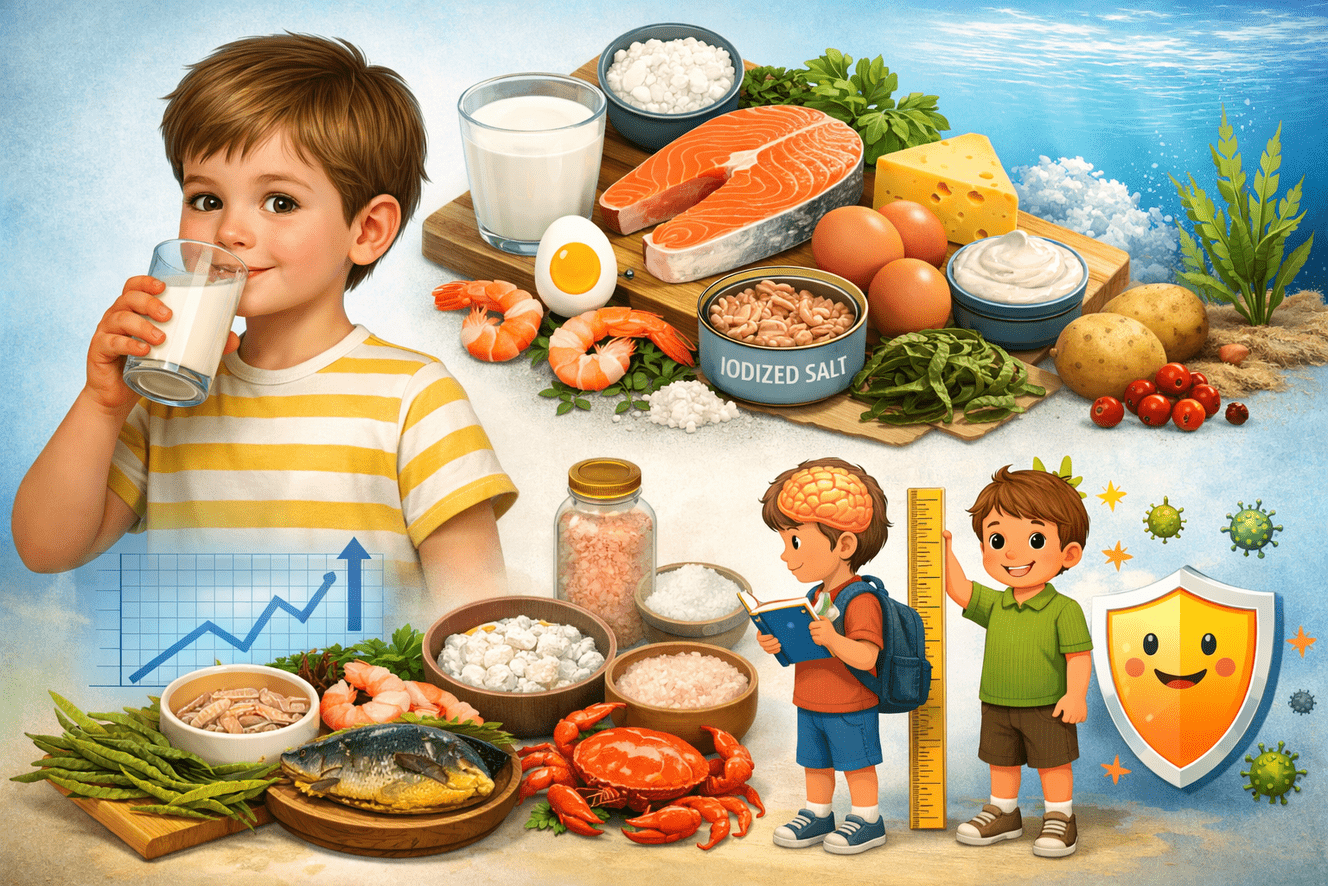
Table of contents:
- Introduction
- What Is Iodine?
- Why Is Iodine Important for Children’s Growth and Development?
- What Happens If Children Don’t Get Enough Iodine?
- How Much Iodine Should Children Need?
- Best Sources of Iodine for Children in Food
- Tips for Parents to Ensure Adequate Iodine Intake in Kids
- Conclusion
Introduction
For parents, kids' growth and development are the top priority. While most parents focus on vitamins and minerals like protein, calcium, iron, fibre, and vitamin D, one essential nutrient goes unnoticed.
Iodine is a trace mineral that the body depends on to produce thyroid hormone. These hormones regulate the body's metabolism and other physiological functions. As children grow, their need for iodine increases.
If not met, children can develop an iodine deficiency, which can affect their growth and health. In this blog, let’s read more about why you need iodine in your child’s diet and its benefits and explore some of the sources to meet iodine needs.
What Is Iodine?
The thyroid gland is an important organ of the body that regulates healthy functioning and supports child growth.
- Key bodily functions that thyroid hormones do:
- Regulates metabolism
- Balances body temperature
- Promotes child growth and development
- Supports reproductive health
A lack of iodine in the body can lead to serious health concerns, which can be avoided by providing good sources of iodine for kids.
What Happens If Children Don’t Get Enough Iodine?
If kids do not receive enough iodine through food, they may develop health concerns that can hamper growth.
The thyroid gland uses iodine to produce thyroid hormone. The body regulates the production of this hormone through the release of thyroid-stimulating hormone (TSH).
However, when iodine levels are low, the gland releases more TSH to stimulate the thyroid to produce more thyroid hormone. The increase in TSH levels with low hormone production leads to consequences that hamper growth, stunt development, and impair cognitive function.
Iodine deficiency in children:

- Hinders metal development and academic performance
- Stunts growth
- Increases the chances of developing Attention Deficit Hyperactivity Disorder (ADHD)
- Goiter (enlarged thyroid gland)
- Hyperthyroidism
How Much Iodine Should Children Need?
Knowing how much iodine your child needs per day is crucial.
According to the Indian Council of Medical Research (2020), the daily allowance of iodine for children between the ages of 1 to 9 years is 90 mcg/day
If your child’s diet lacks iodine, iodine-rich foods and supplements like Health OK Multivitamins can be taken to fulfil the body's needs.
Also Read: Daily Vitamins: How Much Should You Take?
Best Sources of Iodine for Children in Food
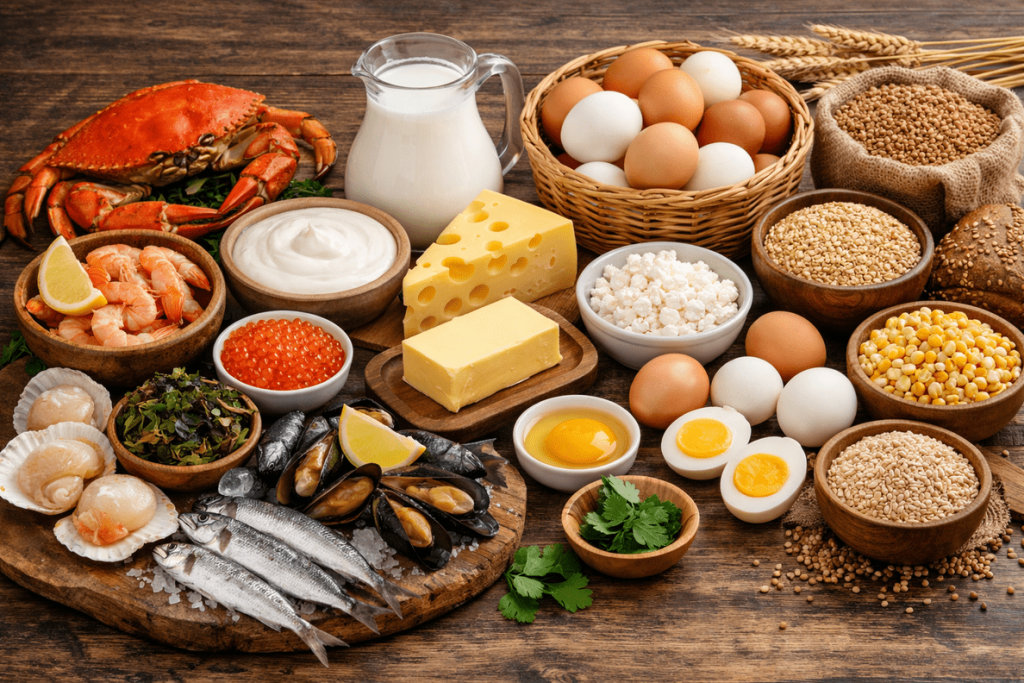
Iodine is rarely found naturally in food. The iodine content is only high in those foods that are grown near the coastal region, and high iodine is found in the soil. For example, grains grown near the coast will have more iodine as compared to grains grown in the inner parts of the land.
Here’s a list of the best sources of iodine in food that should be taken to meet kids’ iodine requirements:
1. Seafood: Fish, shellfish, seaweed
2. Eggs (especially egg yolks)
3. Dairy Products: Milk, paneer, cheese, and curd
4. Grains: Iodine content is based on the soil that they are grown in.
For picky eaters, Health OK Multivitamins can help bridge nutritional gaps and support their overall development.
Tips for Parents to Ensure Adequate Iodine Intake in Kids
Some tips for parents to ensure that their kids receive adequate iodine through their diet are:
- Do not replace iodized salt with gourmet non-iodized salt. It is one of the primary reasons for iodine deficiency in children.
- Check food labels to know the iodine content in food.
- Include iodine-rich foods in kids’ regular diets.
- For kids following a vegetarian diet, ensure regular consumption of milk and milk products.
- To boost the iodine intake, you can rely on multivitamins that have iodine. Health OK Multivitamins are packed with 19+ essential vitamins and minerals, including iodine.
If your child already has a vitamin deficiency, it is important to consult a doctor first before making any dietary changes.
Conclusion
Now that you know why you need iodine in your child’s diet, make sure that your little one does not miss out on this essential nutrient. Iodine supports the thyroid gland in producing thyroid hormone, which regulates various bodily functions. A lack of this can cause kids to experience stunted growth, health issues, and delayed development.
A balanced diet with iodine-rich foods like milk, seafood, and eggs can help them fulfill their daily intake. Remember always, choose iodized salt for kids. For cases when kids still do not meet the recommended level, support them with Health OK Multivitamins, which ensure nutrient fulfillment. It can help kids grow strong and healthy!
FAQs
Yes, low iodine levels in the body can affect brain development and academic performance.
While iodized salt is the primary source of rich iodine in many countries, you can rely on dairy products, eggs, or fortified foods with iodine.
If you avoid both seafood and salt, you can also try Health OK Multivitamin tablets, which are safe and offer essential nutrients to the body.
If you notice symptoms like goiter, fatigue, developmental delays, or weight gain, consult the doctor immediately.
Yes, excessive iodine can be harmful for kids as it creates a thyroid imbalance, which can lead to hypothyroidism or hyperthyroidism. Always stick to the recommended intake for kids, which is 9 mcg/day.
Generally, a balanced diet provides enough iodine. However, in special cases, doctors may suggest iodine tablets or multivitamins like Health OK to maintain adequate levels.