
Table of contents:
- Introduction
- Why Vitamins Matter for Older Adults
- Key Essential Vitamins for Seniors Over 40: Vitamin D, Vitamin C, Vitamin A, Folic Acid
- Minerals That Support Vitamins: Calcium, Magnesium, Zinc
- How to Choose the Right Multivitamin for Elderly People
- Common Deficiency Signs in Seniors and How to Avoid Them
- Tips for Getting Enough Vitamins Through Diet
- Precautions for Using Multivitamins in Older Adults
- Conclusion
Introduction
As we age, the body undergoes significant changes. Many bodily needs and processes change compared with earlier life. For instance, the body’s ability to absorb and use nutrients decreases. As a result of these changes, immunity weakens, nutrient absorption declines, and overall energy declines. That’s why older adults often need extra vitamins and minerals to maintain health and function. Let’s understand in detail why there is an additional need for multivitamins for senior citizens and which nutrients can support their overall well-being.
Why Vitamins Matter for Older Adults
Additional vitamins are important for older adults because they help support smooth bodily function. The body’s ability to absorb, process, and use nutrients declines with age, often resulting in low energy levels. That is why they require additional vitamins and minerals to keep up with the body's demand.
Some factors, such as decreased appetite, digestive changes, and medication side effects, further increase the need for additional nutrient support.
While a balanced diet is the best way to receive all the nutrients, sometimes, due to decreased appetite or certain health conditions, additional support may be needed. Multivitamins for senior citizens are one of the best ways to fulfill this need to stay active and strong.
Supplements like Health OK multivitamin for elderly help bridge the nutritional gap that often develops with age-related changes.
Essential Vitamins for Seniors Over 40

- Vitamin B12: Vitamin B12 contributes to energy, metabolism, and the development of red blood cells. Absorption of B12 decreases with age because stomach acid production naturally declines. This makes additional vitamin B12 intake essential for adults in old age.
- Folic Acid: Folic acid prevents cognitive decline and supports brain function, which is essential for people in old age.
- Vitamin D: Vitamin D supports the absorption of calcium, which keeps the weakening bones strong. It also strengthens immunity and muscles. Due to certain health conditions, the body’s ability to synthesize vitamin D may be reduced, increasing reliance on multivitamins.
- Vitamin C: With age, skin becomes thin and heals slowly. That is why vitamin C is required, as it accelerates wound healing and boosts collagen production. Moreover, it helps absorb iron, supporting healthy blood.
- Vitamin A: Vitamin A is essential to support vision and immunity. Additionally, it also helps the body fight infections.
Minerals That Support These Vitamins
- Calcium: Calcium keeps bones and teeth strong. Ample calcium is needed as we age because bone density naturally declines, increasing the risk of fractures and osteoporosis in seniors.
- Magnesium: This vital mineral is involved in over 300 biochemical reactions in the body and supports nerve function, blood sugar levels, and heart health.
- Zinc: Boosts immunity and helps in wound healing. It’s a key ingredient in many multivitamins for seniors, as reduced appetite and age-related changes reduce zinc intake.
Together, these minerals enhance the absorption and function of essential vitamins, making them a must-have for multivitamins for elderly people.
How to Choose the Right Multivitamin for Elderly People
When choosing the best multivitamin for older adults, look for tablets that include all essential nutrients. These include vitamins B, D, C, and A, and minerals like calcium, zinc, and magnesium.
Additionally, multivitamins for seniors should be easy to digest and cause no stomach discomfort.
Health OK Multivitamins can be taken by senior citizens, as they are a trusted choice for many. Moreover, they contain all the essential vitamins that the body needs with age. These multivitamin tablets offer 24-hour vital energy and boost immunity, which are essential for anti-aging in men.
Also Read: Maintaining Your Body's Vitamin Needs As You Age
Common Deficiency Signs in Seniors and How to Avoid Them

Older adults commonly face deficiencies in vitamin D, B12, and calcium. Signs may include:
- Weakness and confusion
- Slow wound healing
- Frequent bone issues
- Lack of appetite
- Digestive issues
To avoid these, maintaining a well-balanced diet and taking a multivitamin for seniors after meals can help. This can help you meet your daily nutritional requirements and support smooth bodily function. However, if symptoms are prominent, always consult a doctor before making any dietary changes.
Tips for Getting Enough Vitamins Through Diet
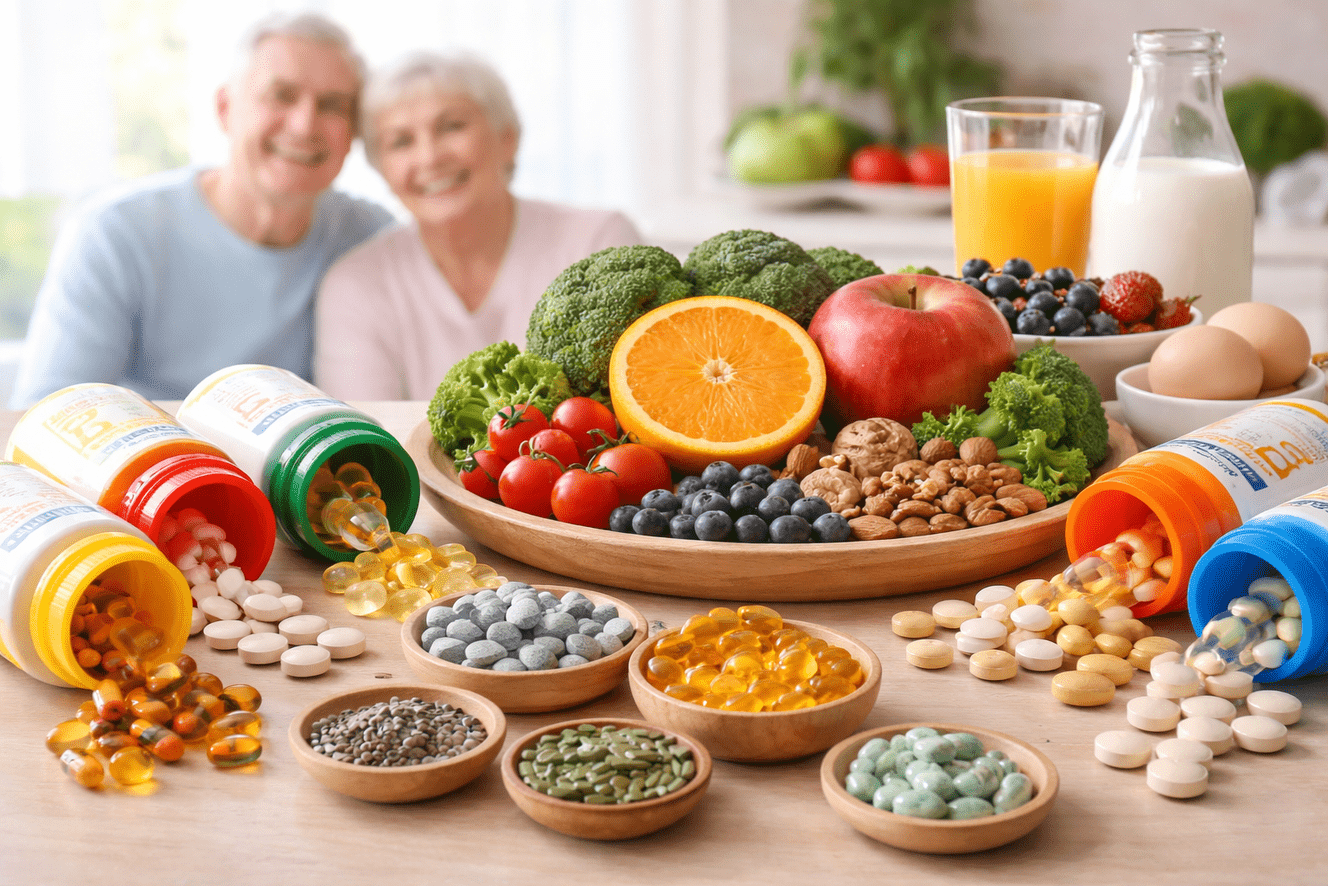
While multivitamins for the elderly are helpful, a balanced diet with nutrient-rich foods should be taken regularly. These include:
- Vitamin A: Carrots, sweet potatoes, and dark green vegetables
- Vitamin B: Whole grains, legumes, bananas, potatoes, poultry, and dairy products
- Vitamin C: Citrus fruits, berries, and bell peppers
- Vitamin D: Spend more time in the sun and eat fish, red meat, and vitamin D-fortified foods.
Precautions for Using Multivitamins in Older Adults
Before making any changes to the diet to increase the vitamin intake for seniors over 70, always consult a doctor. This is even more essential for those who have certain health conditions or take specific medications.
Overconsumption of vitamins can lead to nutritional imbalances. For instance, overconsumption of zinc can affect copper absorption.
Conclusion
With age, the body’s ability to absorb and use nutrients weakens. This increases the need for multivitamins to meet the needs and help the body function properly. You should choose the best multivitamins for senior citizens over 70 by studying the vitamins and minerals they include. The multivitamins should also be easy to digest and safe for seniors. With the right combination of vitamins and minerals, like those found in Health OK multivitamins for the elderly, seniors can improve energy, strengthen immunity, and enhance overall quality of life.
FAQs
To increase energy levels in old age, people should consume a nutrient-rich diet, exercise regularly, and take a multivitamin for seniors every day to meet additional nutrient requirements. Health OK multivitamins can boost energy levels and reduce fatigue.
Meals rich in essential vitamins and multivitamins for seniors that contain vitamins A, B, C, and D should be taken regularly to support energy.
Yes, older adults can get enough vitamins through diet. However, with age, nutrient absorption decreases, which increases the need to depend on multivitamins for the elderly in the diet.
Tiredness, weakness, digestive issues, low energy, and slow wound healing are common signs that may indicate the need for additional nutrient intake through multivitamins for older adults.
Yes. It’s best to discuss health needs with a doctor before choosing any vitamins for old age or the best multivitamin for men over 40, 50, 60, and 70.